
Contractor field guide · Free template
Permission to look is not permission to repair.
Before you open the wall, lift the tile, excavate the line, or disassemble the equipment, define exactly what the customer is authorizing—and where that authorization stops.
The short answer
A destructive access authorization defines a limited investigation.
It identifies the exact surface or component that may be opened, why access is needed, how much disturbance is expected, what protection or patching is included, the diagnostic price or cap, and the point at which work stops for findings and a new customer decision.
The cleanest boundary is simple: authorization to expose and inspect does not automatically authorize the resulting repair. Once the condition is visible, document the findings and obtain a separate repair approval or change order.
Before the first cut
Define the access. Preserve the next decision.
A useful authorization makes the customer’s consent specific enough to understand and the contractor’s stop point clear enough to follow.
- 01
Choose the least destructive method
Start with records, visible inspection, meters, cameras, or removable access where they can answer the question.
- 02
Mark the exact area
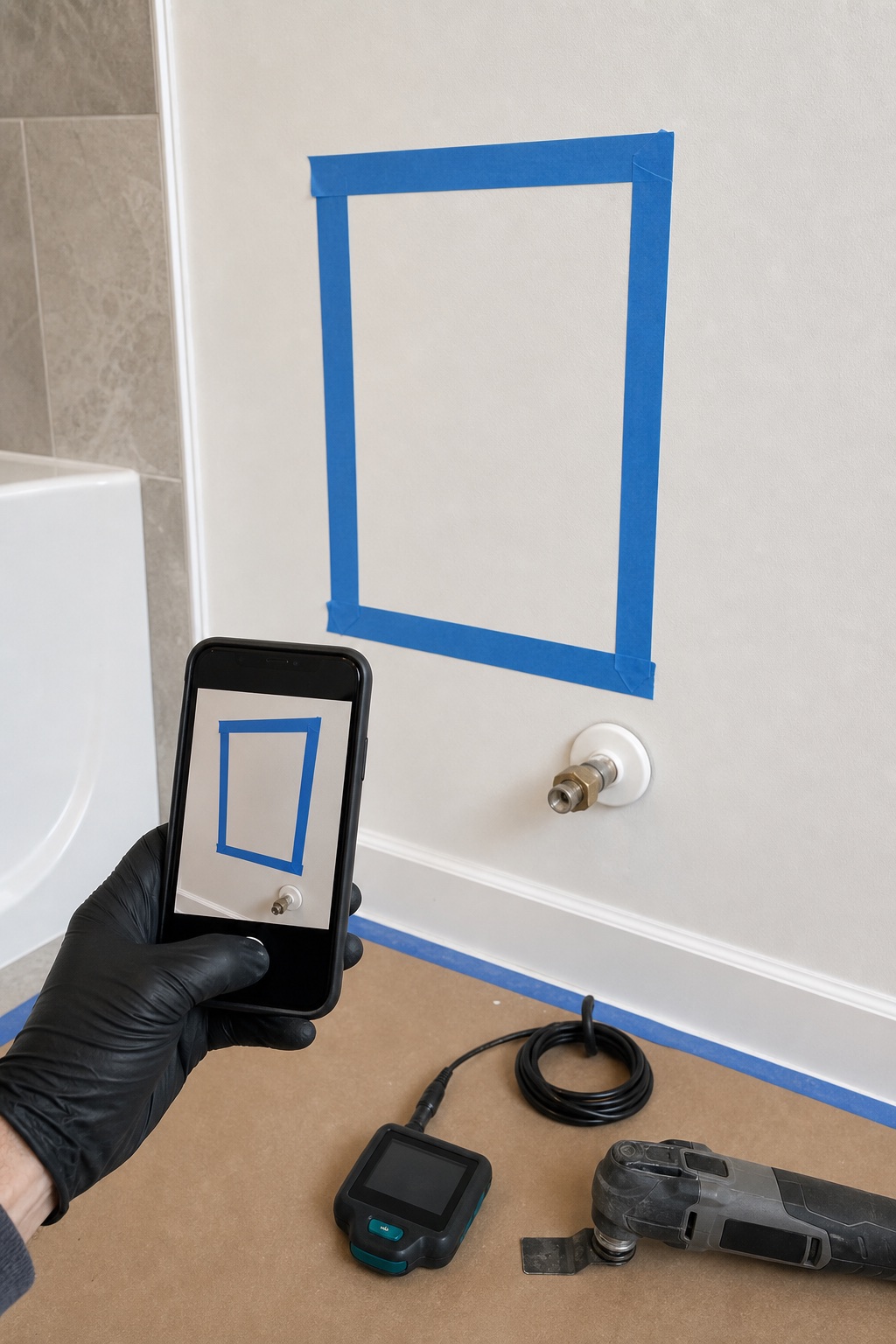
Photograph dimensions, finish, nearby fixtures, and the proposed opening before work begins.
- 03
State expected damage
Identify drywall, paint, tile, trim, landscaping, or equipment that may not be reusable.
- 04
Set price and restoration limits
Separate diagnostic access, temporary protection, basic patching, and finished restoration.
- 05
Stop for findings
Document what is exposed and obtain separate approval before repair, expansion, or hazardous-material disturbance.
Copyable template
Destructive access authorization
Replace the bracketed prompts. Use dimensions, photos, and plain descriptions so the approved disturbance is unambiguous.
Create and sign it with JobSign →- Property & area
- [Customer, address, room/area, component, and photo reference]
- Reason for access
- [Question to answer or condition to locate; avoid promising a diagnosis before access]
- Authorized method
- [Opening, removal, excavation, disassembly, test, or camera access; include dimensions and limits]
- Expected disturbance
- [Surfaces/components likely to be cut, removed, damaged, or not reusable]
- Protection & access
- [Dust containment, occupant/pet access, utility shutdown, furniture protection, and work hours]
- Restoration included
- [Temporary cover, rough patch, finish-ready patch, full finish restoration, or expressly excluded]
- Diagnostic price
- [Fixed $___ / hourly $___ / not to exceed $___; state materials and disposal included]
- Stop conditions
- [Suspected hazardous material, unsafe condition, concealed utility, structural concern, or opening limit reached]
- Not authorized
- [Permanent repair, enlarged opening, finish replacement, remediation, or other work requiring a new approval]
- Findings & next step
- [Contractor will document findings and present repair options or a change order before further work]
Adapt this operational template to your contract, trade, property, and local requirements. It is not legal advice or permission to bypass safety, environmental, permit, or licensing rules.
Four field examples
Say what may be opened—and what happens afterward.
12×18 inch plumbing access
Open one marked area to view supply and drain connections. Temporary cover included; texture and paint excluded pending findings.
Two-tile moisture investigation
Remove up to two identified tiles and limited backer material. Matching tile replacement is not promised or included.
Exploratory excavation
Hand excavate one marked test area after utility-location requirements are satisfied. Repair scope follows findings.
Appliance disassembly
Remove listed panels for diagnosis. Parts replacement, reassembly complications, and additional repair require approval.
The restoration ladder
“We’ll patch it” is not specific enough.
Temporary protection
Cover or secure the opening until findings and repair are approved.
Rough closure
Replace basic substrate without finish matching, texture, paint, trim, or tile.
Finish-ready patch
Patch to an agreed preparation point while final decorative finish remains excluded.
Full restoration
Specify matching limits, adjacent-area blending, materials, and accepted visible variation.
Safety boundaries
Customer permission does not replace regulated-work requirements.
EPA’s Renovation, Repair and Painting program covers many paid activities that disturb painted surfaces in pre-1978 homes and child-occupied facilities. EPA identifies remodeling, electrical, plumbing, carpentry, and window work among covered activities and describes certification, education, and work-practice requirements.
EPA also says asbestos cannot be identified reliably by sight alone. When suspect material may be disturbed, EPA recommends assessment and sampling by appropriately trained and accredited professionals. OSHA separately addresses asbestos exposure in construction. Build these as stop conditions, not as customer waivers.
- EPA: RRP Program for Contractors ↗
- EPA: Asbestos and Home Remodeling ↗
- OSHA: Asbestos in Construction ↗
This guide is general operational information. It does not determine legal responsibility, required licensing, environmental compliance, structural safety, or whether a particular authorization is sufficient in your jurisdiction.
Destructive access questions
Does access authorization include permission to complete the repair?
Not unless the document clearly says so. A careful authorization separates investigation from repair and requires a new decision after the condition and repair scope are known.
Who is responsible for patching after exploratory access?
State the restoration level before work begins: temporary protection, rough closure, finish-ready patch, full restoration, or no restoration. Responsibility may also depend on the original agreement and applicable law.
Can a customer authorize work involving suspected asbestos or lead paint?
Customer consent does not replace applicable safety, environmental, certification, or work-practice requirements. Treat regulated-material concerns as a stop condition and use qualified professionals.
What happens when the opening needs to be larger?
Stop at the documented limit, explain why expansion is needed, update the expected disturbance and restoration boundary, and obtain the required additional approval before enlarging it.
Before the first cut
Make the access boundary clear enough to sign.
Describe the proposed opening in JobSign, attach the marked-area photo, and send the customer a signing link before disturbing the finish.
Get JobSign →